02 March 2011

Margaret Bourke-White

Margaret Bourke-White made history as the first female industrial photographer and the first female to be hired as a photojournalist. Her work is very inspiring to me because I also hope to be a photojournalist and travel around the world documenting social, political, and environmental issues in the hopes of bringing awareness to them and precipitate positive change. One of my favorite quotes by White is “We see a great deal of the world. Our obligation is to pass it on to others.” White is also very inspirational because she made it big in a world where the roles of women were very limited. This is due to her incredible persistence and determination.


She also made history as the first female war correspondent permitted to work in combat zones in World War II and actually flew in American bombers. White was a documentary photographer for Fortune magazine and later became a photojournalist for Life magazine, and her photograph appeared on one of its first covers. She also shot the great depression, and was the first Western photographer allowed into the Soviet Union, where she captured the industrial revolution. 


She made history for being the only photographer to capture the bombs that fell on Moscow. She was also one of the first to document the Nazi death camps. She explains that the barrier that her camera created between herself and the horror and tragedy that she witnessed helped her to maintain her inner tranquility throughout her career


Later on, she traveled to Pakistan and India to shoot the violence that erupted during the independence and partition of both countries. She is also famous for photographing Mahatma Gandhi just hours before his assassination. She died of Parkinson’s disease at the age of 67. Her friend and colleague, Alfred Eisenstaded, said that her work was so great because there was no assignment or photograph that was unimportant to her. She wrote six books about her travels, and three books have been written about her. Her work is displayed in the Brooklyn Museum, the Cleveland Museum of Art, the Museum of Modern Art, and the Library of Congress. 

Andy Warhol Exhibit- Schwayder Art Building (University of Denver)

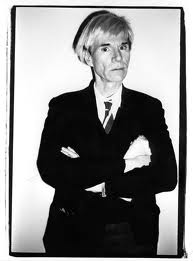
Photograph of Andy Warhol
by Mark Sink

The Andy Warhol Exhibit in Colorado is composed of 158 of his Polaroids and silver prints that the Andy Warhol Foundation donated to the University of Denver in 2008. It also includes photographs of Warhol taken by Colorado artists like John Bonath, Valere Harris Shane, and Mark Sink, who were all in his inner circle of friends. Warhol was fascinated by the goings of everyday, ordinary life, and his artwork shows how ordinary snapshots can become meaningful, beautiful, and sometimes darkly fascinating with vibrant colors. Like Richard Avedon, Warhol was so involved with portraiture because he thought that people were the most fascinating subjects. He said, “people are so fantastic that you can’t take a bad picture of them.”


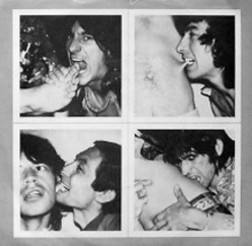
Sticky Fingers

Warhol’s photographs are mostly taken of his friends and often reflect very defined and traditional gender roles, as men appear serious and working, and women appear beautiful, carefree, and with sex appeal. Warhol, however, was very interested in human sexuality, and willing to deviate from the social constructions of masculinity and femininity, which is attested by his Ladies and Gentlemen (1974) series of photographs of transvestites in Grenich Village. Many of his photographs were erotic and even pornographic, and many of the subjects of these images were homosexuals. This is also evidenced by his series of 5 silkscreens of Jagger, which is androgynous themed. Warhol went through a phase where he was fascinated by the motif of biting and licking. One of my favorite pieces was the cover of the 1971 Rolling Stones album cover, Sticky Fingers, which shows the members of the band biting themselves or each other.

            Warhol is mot famous for his pop art and celebrity imagery. Though he critiqued commercialism, he often reimaged mercantile brand name products, like his most famous piece of a Campbell’s soup can, and used them as an art form. He was interested in brand name products, because they served the same purpose for everyone, and every American uses them, whether rich or poor. He said that he was so fascinated by Hollywood because everyone there is plastic, and he loves plastic. Some of his quotes, which were playing on a movie screen projecting his images, seemed very strange to me. Warhol was absolutely fascinated by the artificial, and even said that if he could he would be a machine, because life would be easier that way.


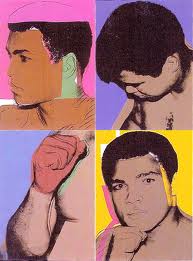
He also said that he wants everybody to like everybody and for everyone to be alike. He also said that he likes to remain a mystery, but that there is nothing deeper to know about him then what the eye sees on the surface of him and his art work. Some of the large and colorful silkscreens displayed in the exhibit are of icons like Superman, Dracula, Santa Clause, Uncle Sam, and Mickey Mouse. Many of his silkscreens are in series’, which use different colors, like those of Mohammad Ali and Mao Zedong. I really liked his serigraph of a turtle, which incorporates beautiful blues, greens, and oranges, and his silkscreen cow wallpaper of different sized pink cow heads against a yellow background.

            I really like Warhol’s style of art and respect his willingness to deviate from what was considered tolerable in the art world. His work has captured the imaginations of millions of people around the world, and he will continue to be remembered as one of the most influential artists of all times. 

28 February 2011

Denver Art Museum- Bonfils-Stanton Modern & Contemporary Art Exhibit

As I walked through the Denver Art Museum’s exhibit of modern and contemporary art, I couldn’t help but be confused. As I struggled to make sense of the art I was seeing, I thought back to Richard Avedon’s quotation that all art is meant to disturb. Many people define good and meaningful art as art that makes people look twice. Eyebrow raised and head tilted, I stopped to stare at many of the modern and contemporary pieces for more than just a few moments.

One piece that was particularly frightening was a sculpture of a seemingly demonized African-American baby standing upright in a crib surrounded by shredded materials. This piece was hidden behind a wall, and when I saw it I actually jumped back in fright. Another spooky piece was Stacey Steers’ Haunted House, which appeared like a black haunted dollhouse with projections of scary images like snakes and rats in each room.

Unlike many other genres of art, modern art is extremely abstract and has no cohesion or common theme. I struggled to compare the pieces with each other because they were so different. As I walked by a white sculpture of a naked boy with a black scarecrow on his head and a naked woman on the floor with an enlarged black hand, I would turn my head only to find another seemingly senseless piece of a small man made of Styrofoam enclosed in a glass case. There were few artist statements to accompany the pieces, so my understanding of them was left to my own interpretation.

            What at times frustrated me as I walked through the exhibit was that though many of the pieces I saw made me look twice, they didn’t seem to shock me in a meaningful way. It was especially frustrating when the artistry of the pieces seemed less than impressive, like the Styrofoam man, for instance. I couldn’t help but think to myself that I could create a man out of Styrofoam, perhaps even a more visually interesting one.

            Then there were the occasional pieces that did shock me in a meaningful way, like Fox Games, by Sandy Skoguld. Skoguld combines various mediums of art, such as theater, sculpture, paint, and photography to create an illusory and imaginative world where gray life-size sculptures of foxes are prancing around an all red dining room. Absolutely everything is painted red except the foxes, making them stand out beautifully against their surroundings. The wires that are suspending the foxes in the air are also painted red, making it look as though the animals are actually jumping through the air.


            Another powerful piece was a large sculpture by the African artist, El Anatsui, made entirely out of bottle caps. In his artist statement, he says that he hopes to show people that they can make art out of anything. He wants to show that metal, which is commonly thought of as a rigid material, can actually be very pliable and easily manipulated. The large sculpture has large flowing cracks and crevasses, making it appear like a waving flag. I thought that this was a very visually and conceptually inspiring piece.

            For me, I think that modern art will always be a hit or miss. I find the abstraction and surrealism of the genre interesting, but at times frustrating. It is so varied with contemporary artists contrasting conceptions of art and methods of experimentation that I will never have a consistent response to it. 

Denver Art Museum- Robert Benjamin: Notes from a Quiet Life

            Robert Benjamin’s photography exhibit in the Denver Art Museum is of 40 color prints and Polaroids that he created between 1984 and 2003. A majority of his photos are of his family. In his artist statement, he says that he hopes to show the beauty of every day life, which I agree is often taken for granted in today’s culture of always being on the go.

            Overall, I was not very impressed by his work. Most of his photographs seemed very average to me and didn’t leave me with the urge to look twice.  I could see how the photographs are meaningful to him, as the subjects of them are his loved ones. I thought that many of them were nice candids, but not worthy of being displayed in a nationally acclaimed art museum. I appreciate the fact that his intentions with his work are not to please anybody but himself, but then I don’t understand why his work would be on display for others to view. He admits that he believes his subject matter is no longer tolerable in art as many photographers these days are trying to capture scandal and violence, but I think that many artists are also trying to capture other things in life like the beauty of nature, for instance, and in more visually interesting ways.


I thought that his strongest photo was of his daughter through the glass window of a vehicle. I am not sure how he printed the photograph but it appeared as though he superimposed multiple images, which created beautiful chromatic relationships and a timeless and magical ambience.


 I also thought the colors and his work with depth of field were also strong in some of his other photographs, like the one of his daughter drinking a green Italian soda. Overall, I thought his photographs were not very visually interesting to me, but that the concept behind his work, which is to cherish family and the beauty in everyday and seemingly ordinary moments, is indeed inspiring. 

Richard Avedon


Richard Avedon’s work also sparked my interest in portraiture as well as fashion photography, which I have never really been interested in. His extensive and famed portraits of celebrities and fashion photographs helped to define style, beauty, and pop culture in America for the latter portion of the twentieth century. Avedon photographed some of the most renown celebrities in the world, including artists like Pablo Picasso and Andy Warhol, writers like Aldous Huxley and Henry Kissinger,  musicians like Louis Armstrong, Bob Dylan, Janis Joplin, and The Beatles,  and actors like Marilyn Monroe and Audrey Hepburn. After viewing Avedon’s work and learning about his life through his documentary, I really began to see fashion as a lively and interesting art form, which reflects cultural trends in society and changes in aesthetic conceptions.  

I have a lot of respect for artists like Avedon, who push the boundaries of what is considered acceptable within their art forms and who are willing to deviate from the social norms. A quotation by Avedon that I will always remember is that “all art is meant to disturb.”  Most fashion photographs of the time showed models as emotionless and detached from the camera, but the subjects of Avedon’s photographs were generally very vibrant, full of emotion, and often in movement. People who worked with Avedon explained him as extremely energetic when working with models, and one person said that he would be jumping around and moving more than his subjects would be during their photo shoots. He is famous for his large prints and well-lit black and white portraits in front of white backdrops. He is able to show such clear and intricate detail in the faces of his subjects, which make his portraits so enthralling.
Avedon also changed the general notion that in portraiture photography the subject is in control of the photo, and instead always assumed control of his photographs as the photographer. He always had a strong artistic vision and was not willing to compromise it for the wants or desires of his subjects. Avedon was very determined to capture the souls and personalities of his subjects and would sometimes ask very personal, provoking, and even uncomfortable questions to them in order to elicit a reaction and capture an expression that was not captured by other photographers. He was also famous, however, for making his subjects very comfortable and at ease, which allowed him to capture very intimate photographs that were also unparalleled. 

                  Avedon also photographed miners and workers in the American West in the early 80s, and his book of images became one of his bestsellers, but was also criticized for denigrating the west. One of his western subjects, Sandra Bennett, criticized Avedon for making her look so grungy and solemn in her portrait and for her freckles being so visible. Avedon responded that there is no such thing as inaccuracy in a photograph and that “all photographs are accurate,” but that “none of them is the truth.” In a way, I agree with him because photographs are exact reflections of what the human eye sees through the lens of the camera, and the truth is ambiguous. However, I think that some of his strategies to evoke certain emotions and reactions in his subjects were a little manipulative and deceiving. Regardless, it is undeniable that Avedon will continue to be remembered as one of the best portrait and fashion photographers in the world, and his photographs will live on and continue to inspire and fascinate viewers. 

Debbie Fleming Caffery

I also found the work of Debbie Fleming Caffery to be very captivating. Caffery has photographed the sugar cane harvesting industry of her home state of Louisiana every year since she was very young and is her only lifelong project. She has also photographed the plight of prostitutes in Mexican brothels, the carnivals in Mexico, the aftermath of Hurricane Katrina and Rita in New Orleans, and the aftermath of the BP oil spill in the Gulf of Mexico. Caffery’s photos are all black and white film and in the documentary about her work, she says that she will never work with digital photography. 


She says that she sees the world as black and white and is very close to the printing process. She views her subject matter in its negative form before actually taking the photos. 


Because she has such a unique artistic eye, the lighting, shadows, highlights, and tonality of her black and white photographs are always visually stimulating and thought provoking. She also often works with movement and depth of field, both very visually interesting photographic techniques.


She also said that she is very interested in smoke, which is conveyed in many of her photographs of the sugar cane industry, which I think is a very cool effect. I think that her passion and persistence with her work of the sugar cane industry is very admirable. When I see her photographs I feel like I can hear the burning and crackling of the sugar cane and feel the heat of the fire, which is a very challenging feat for an artist to accomplish. I think that the emotional and visual depth of her images is rarely paralleled by other photographers. It is extremely difficult to photograph in the night with no natural light to work with, and her ability to create such effective night photographs is also very impressive.


I think that the photographs of the aftermath of hurricane Katrina are historic and inspire people to sympathize with the victims of its destruction. She said that she was appalled by the slow and unorganized responses from rescue teams after the hurricanes and wanted to pay her respects and show her empathy for the victims through her images. Some of her photographs, like those of the people singing and praying in the gospel churches, show the hopefulness of the victims. She also hopes that her images help the process of catharsis for those who were affected by the storms.


Some of her images of the prostitutes in the brothels of Mexico are quite disturbing and even frightening. One of my favorite images is of a prostitute who is standing by the stairs and transparent, looking like a ghost. She really opens viewers’ eyes to the lives of the women, and the dangers, hardships, and repressions implicit in their careers. Like Adams, Caffery’s intentions with her photographs are very sincere and she respects the dignity of all of her subjects. Her images bring a sense of humanity to her subjects, which help people to relate to and sympathize with them. It also helps viewers to respect women who are involved in a very provocative and controversial business.  

Shelby Lee Adams


I found the work of Shelby Lee Adams to be absolutely fascinating and very inspiring. I was not very familiar with portrait photography or very interested in it until I saw Adams’ portraits of the Appalachians. After watching the documentary about his time photographing Appalachian family life since the mid-1970s, I learned that this specific body of work has sparked a lot of controversy. Many people think that his images exploit poor Appalachian families and enforce negative stereotypes about their culture.


This is because many of his photographs show the Appalachians in impoverished surroundings, with somber, unsmiling facial expressions, and at times with missing teeth, dirt on their faces, and “hilly-billy” like clothes. One specific photograph subject to debate is of a girl with a somewhat saddened expression, who is peeking her head through the hole of a broken fence. The aunt of the girl was angry because she thought that the photograph made it seem like the girl was very sad and poor and conveyed an inaccurate portrayal of her life. But Adams didn’t ask the girl to poke her head through the fence to draw attention to it, she did it on her own.


                  I don’t think that the work of Adams is contentious or provocative in any way, but rather very admirable and inspiring. Adams was born in Kentucky, is very familiar with and partial to the Appalachian culture, and is most often friends with his subjects. Because he is friends with his subjects, they feel very comfortable and are able to be themselves when they are being photographed, so he is able to capture very beautiful, intricate, and authentic facial expressions. Richard Avedon said that he considers the human face the most interesting thing to photograph in the world, and I didn’t really realize this until I saw his and Adam’s incredible portraits.

In his artist statement and in the documentary, he explains that he absolutely loves and respects the mountain people, and that his intentions are very genuine, which are to hopefully communicate the endearing strength, resourcefulness, gratefulness, and dignity of the Appalachians. He also always gets his subjects approval before he shows his images to the public, which I think is the only real criteria necessary for approving a photograph. Some people argue that the Appalachians don’t have the intellectual capacity to understand that they are being exploited, but I think that that is very presuming and judgmental. His subjects appreciate his work and believe that his photographs are original and true depictions of their lives.

His portraits of the mountain people are all black and white film, and are all extremely effective and interesting to me. I find myself wanting to know the life story of all of his subjects because he makes the lives and personalities of them so intriguing. He uses light and composition very effectively, and the balance between black and white is always spot on. He also uses very interesting props with his subject matter that helps to convey their unique culture. I think that the work of Adams opens viewers’ eyes to a unique and endearing culture of people that many people don’t even know exists. It inspires people to widen their horizons and consider the lives of people in states of poverty, oppression, and trauma, which many people try to neglect because it causes feelings of guilt and sadness, but I think it can inspire people to be grateful and more open-minded to different types of people in the world.